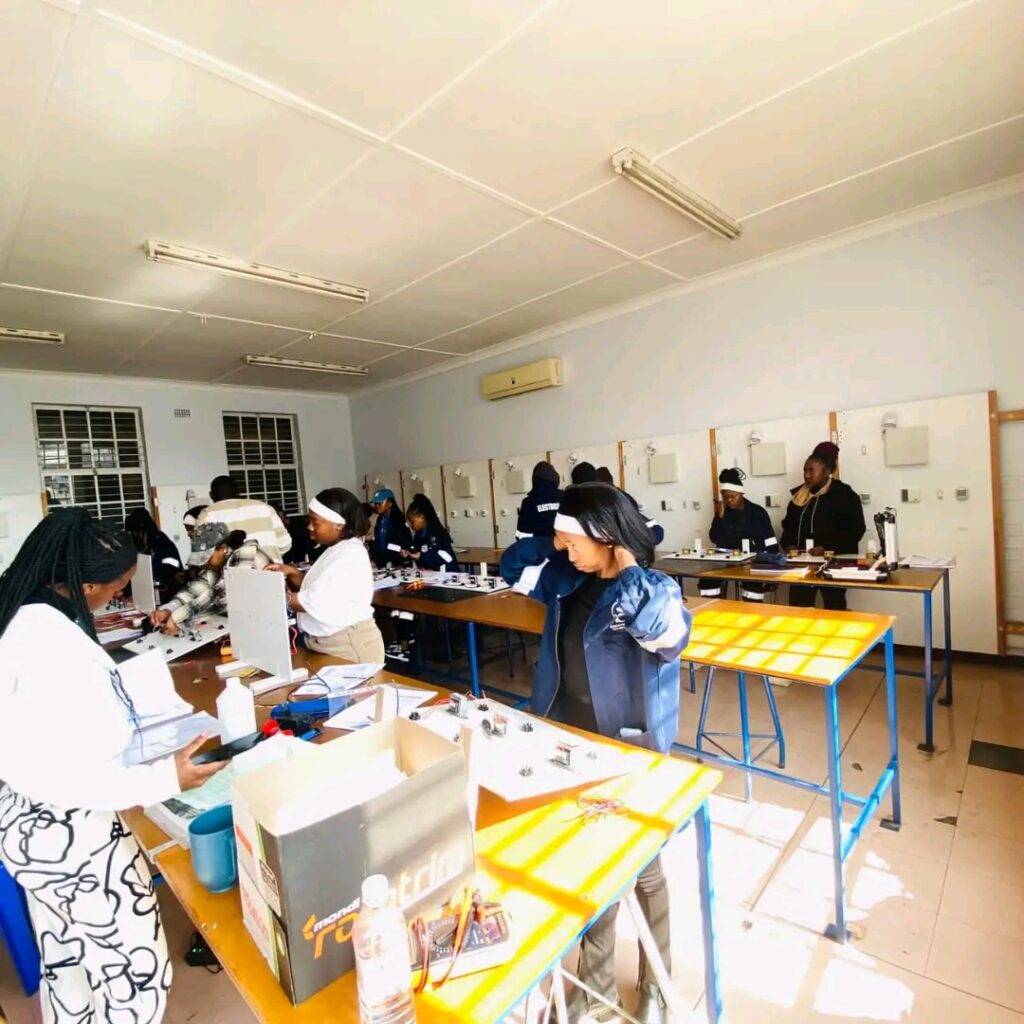
Reasons Why Job Hunting Is Difficult in South Africa Using a Trade Statement
A trade qualification can be an important first step on the road to employment for many young people and skilled employees in South Africa. Learning a trade such as electrical installation, pipefitting, welding, fitting and turning, motor mechanics and other technical occupations, and a trade statement will not necessarily lead to a job.
Many fully- or semi-qualified tradespeople find that making the move from training to working life can be a bit of a shock. The challenge is not necessarily a lack of ability. Instead, job hunters can experience a variety of issues, including a shortage of vacancies; experience requirements; level of competition; location; economic factors and a skills mismatch.
It is good to be aware of these barriers if you are hoping to launch a career in South Africa’s skilled-trades industry.
1. Trade Qualification Does Not Lead To Employment
The most common misconception is thinking that if you do a trade course you will get a job.
A trade statement can show that a person has done a course or gained some skills, but an employer will still pick the person they want to employ. They will look at experience, other qualifications, references, communication skills, licences and what they need for the job.
This means two individuals with similar skills might end up with different jobs.
What is the answer? “That is the million-dollar question for a lot of newly qualified tradespeople,” Mr Da Costa said. “How do you get the experience when you are told you need experience from someone who just left school?”
The result is a vicious cycle for newcomers to the industry.
2. Employers Often Want Experience
One of the greatest obstacles for new tradespeople is experience.
Another frequently listed statement is a number of years of practical experience: 2, 3 or even 5 years in a advertised vacancy. For someone with a good deal of experience this can be acceptable. However, for the newly-trained this can make their first job very hard to come by.
While training offers both valuable knowledge and on-the-job experience, employers might still be looking for evidence that the person will be safe and effective in a real work environment.
Employers may prefer someone who has done the job before, especially if they need to be familiar with production deadlines, equipment, customers, supervisors and safety procedures.
This highlights the importance of apprenticeships, internships, learnerships, exposure and entry levels.
3. Job Seekers Are Competing for Limited Positions
South Africa faces a crucial employment crisis, mostly among the youth. In other words, a qualified tradesperson is not only up against someone who has the same set of skills. They could also be up against another person who has more experience, a specific certificate or a better network.
A single vacancy can attract many applications.
The employer then may be able to fill the position with an applicant who has experience rather than take the risk of hiring an entrant to the field.
This does not imply that qualified tradespeople have no chance. It means that the mere possession of the basic qualification may merely be the beginning of the competition.
4. The Economy Affects Skilled-Trade Employment
The availability of jobs for tradespeople is directly related to economic activity.
Builders, workshops, factories and mines, engineering companies, maintenance contractors and manufacturers are seeking skilled workers when they are growing, or reinvesting in equipment or increased production.
If a business cuts spending, postpones projects, or shuts down, hiring slows.
Hence, a qualified but unemployed worker may be actively seeking a job when few vacancies are available.
This is a key point: unemployment does not mean no skilled people (or even no skilled people in one place, at one time), it means no or insufficiently suited jobs.
5. Location Can Make a Major Difference
South Africa has a big land area, and the jobs are also spread out.
An individual residing in a town may have very scarce opportunities in their own trade for employment, whereas job prospects may be much greater in urban centres, industrial zones and economically active towns.
Relocating, however, is not always realistic.
Relocating to another province or city will come at an expense of transportation, accommodation and even living expenses. An unemployed person might not have the financial means to travel to find employment or even to attend interviews.
This forms a geographical barrier that is not always highlighted when talking about unemployment.
6. Employers May Want Additional Certifications
A trade statement may be a separate qualification to that needed for a specific role.
Sometimes, employers ask for any other licences, safety training, specific equipment experience or other industry-recognised certificates.
For instance, an employer might be looking for an applicant who is familiar with specific industry systems and equipment, maintenance practices or health and safety standards at your workplace.
This may create a further financial problem, as extra training and certification may also come with a cost.
Some unemployed job seekers know they need an extra qualification and see it would help them find a job but just can’t afford to do it because they are not earning a wage.
7. The Importance of Workplace Experience
Understanding a concept and actively managing the high pace of a busy practice are two very different tasks.
In training, students may use machinery and carry out practical tests in a supervised environment. In employment there can be unplanned breakdowns, deadline pressures, targets, customer pressures and responsibility for costly plant.
In terms of assessment, work experience is king.
This is one reason we need apprenticeships and structured workplace programmes so much. They give you technical skills and teach you the expectations of a working environment.
For new tradespeople, even brief months of real, related experience can add muscle to a CV.
8. Networking Can Influence Opportunities
Jobs are not always in the newspapers.
In the trades, a potential new hire for a skilled trade job can be referred by friends, coworkers, past employers, or their professional associations.
A person who has been employed by skilled tradesmen or a contractor might therefore be aware of opportunities that are not promoted on a broad basis.
It does not mean that qualifications do not matter. It means that technical skills and relationships are not mutually exclusive.
If you establish a reputation for being safe, punctual, trustworthy and doing work to a high standard, that will help you secure work when the chance occurs.
9. The First Position Can Be the Hardest
For many individuals, the toughest challenge is obtaining that initial significant position.
After a few years of experience, your CV can show exactly what you have achieved. It may have references, you may have projects you have completed and a track record of the settings you have been working in.
You cannot beat a properly qualified tradesperson, as they will have the evidence.
This is why entry-level jobs can be very important: the first job may not be the position that pays the most or that is the most ideal, but it can give you the work experience you need.
So the key problem is trying to find an employer who will give that new worker a shot.
10. Think of a Trade Statement as a Starting Point
You may experience difficulty finding a position but do not see a trade statement as the end of the road.
Part of professional development is better understood.
Building up your job position can be done by gaining experience, gaining skills, having a professional CV, establishing contact within the industry and staying up-to-date.
Employers can also look at various contexts for employment. Some trades will have employment opportunities in areas such as maintenance, construction, manufacturing, engineering services, facilities management, contracting, and so on.
Experience will become just as relevant as the qualification.
What Can Job Seekers Do?
While it is not possible for a person to control the overall economy or the vacancies, they can work on making their approach to the job search better.
A good CV should indicate the trade, practical skills, workplace experience, qualifications and relevant experience. Applications should be tailored to each vacancy.
Businesses: Jobseekers might want to reach out to individual companies, register with reputable recruitment agencies, keep an eye on vacancies for apprenticeships and on-site training. Make connections in the industry.
Practical portfolios may also be helpful in certain circumstances. When other people’s work is not used to demonstrate the applicant’s own practical competence, photos or recorded examples of suitable projects can be submitted.
Second, applicants should keep polishing their skills during their job search.
Conclusion
However, in South Africa, a trade statement will be insufficient to get a job. That’s because the barriers in the labour market are entrenched and qualification can only do so much.
New tradespeople could find themselves with limited vacancies, high competition, experience requirements, travel restrictions, higher costs for certification. An economy that is not always supportive of everyone who wants to work.
For someone who has paid a fortune and spent years training to be ready, it can be especially galling when companies demand experience first before they will give you the first chance.
Nevertheless, a career in the trades is still a valuable qualification. You might just have to be a little patient for your skills to transition into a steady paying position; gaining some industry experience, making contacts and gaining new skills.
Providing these entry-level opportunities can also go a long way toward building the next generation of skilled tradespeople for employers.
For the job seeker the message here is that the qualification is not an endpoint; it is the start of a track record.
In the end, it is not really whether we have the skills – it’s whether our economy can generate enough of the right kind of opportunities.
A trade statement can open a door — but in a challenging job climate, getting someone to open the door can be the most difficult aspect.
