Moving with technology without leaving people behind: The SASSA vision for a Citizen-Centred, Secure, Modern Agency
“We have to adopt technology without leaving the less fortunate behind. We have to evolve without excluding others.”
This is how SASSA CEO, Mr Themba Matlou, summarises the key question for public service bodies in an age of growing digitisation: how to transform services without leaving a beneficiary behind.
With tech changing the way people get access to information, deal with institutions and access public services, SASSA is also taking a keen interest in the way the agency will transform itself digitally. But SASSA also warned that technology should not become an access barrier for people who find it difficult to use digital platforms.
In what was clearly a direct appeal to the journalists in attendance, Mr Matlou noted that SASSA’s vision is to build a modern, trusted, efficient and effective social security administration.
SASSA manages a total of 19-million social grants each month. This is a huge responsibility, and it demands secure, scalable and user-centric systems that can support 19-million people throughout the country.
Technology offers huge potential for an organisation of this size. But the organisation needs to be mindful of not alienating people who don’t have access to the internet or devices, who lack skills or confidence online.
Modernising SASSA Services
A second theme arising from Mr Matlou’s speech is that we need to modernise the manner in which beneficiaries will interact with SASSA.
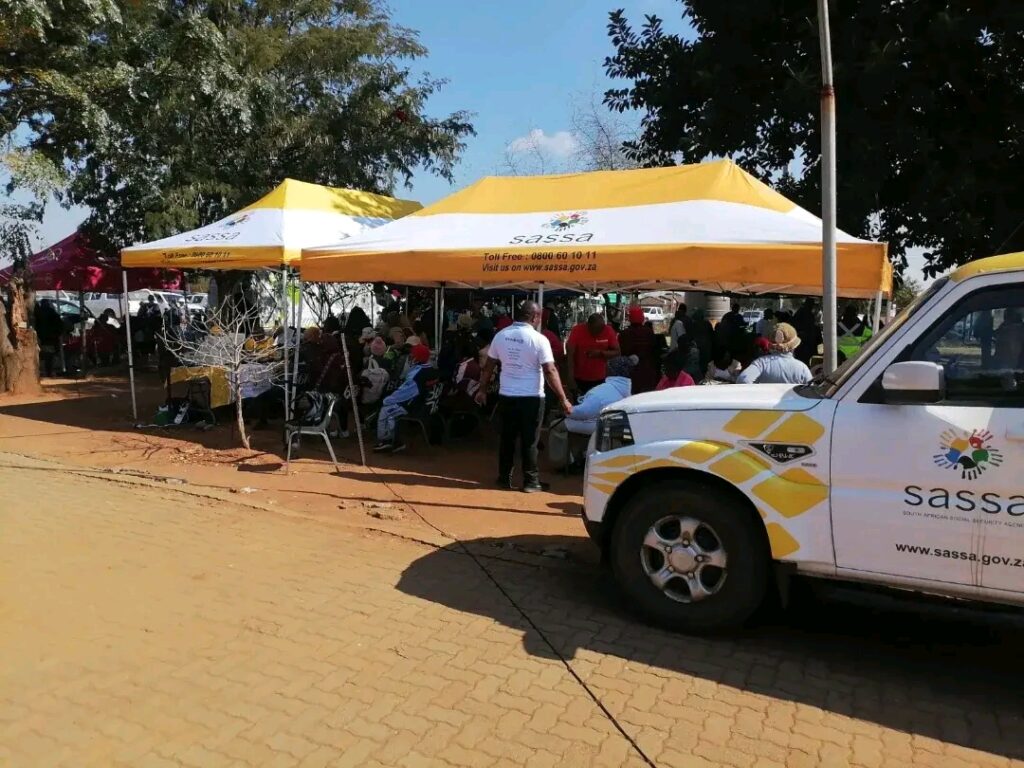
Face-to-face services will continue to be relevant, especially for those who need help with an application, review, documentation, etc. Digital services will expand the reach of services, allowing people to get information and do some processes without the need to visit a SASSA office.
Accordingly, the agency will also be expanding a number of digital channels including online application, WhatsApp services, electronic verification, and self-service kiosks. Free Wi-Fi at SASSA offices will be made available to beneficiaries.
The current financial year, and YouTube videos are also in the pipeline. A SASSA mobile app is to be launched in the third quarter of the current financial year.
These changes are part of a wider trend towards providing more accessible and more responsive public services. They will no longer be defined solely by a counter or an office, but by a range of means through which they will be accessible.
The key difference here is that digital transformation is never meant to be used to replace SASSA’s current services.
Technology Must Not Become a Barrier
The benefits of digital transformation are huge, but not everyone has equal access to technology.
Not all people have smartphones and reliable internet service or regular experience of using online services. Others may have poor connectivity, outdated devices, little experience or familiarity with using digital platforms or no access to the internet. Elderly beneficiaries in less well-equipped communities may also experience some difficulties.
That is why the story Mr Matlou told about modernising without excluding means so much. Our goal is not to digitise every process. Our goal is to embrace technology in such a way as to enhance service delivery without abandoning supplementary forms of help.
Providing face-to-face support for example, continues to be a vital component of the SASSA service model.
The concept is simple. You shouldn’t have to be a tech geek to access social assistance. Technology can be a convenience if you choose to use it, but support should not be withdrawn from those who need help.
Accessibility isn’t just about putting a service online. This balanced definition means being accessible when the users of the service are able to understand it, reach it and use it.
Supporting Approximately 19 Million Beneficiaries
Due to the number of responsibilities SASSA has to carry out, the administration has to be carried out effectively.
Between 18 million and 19 million beneficiaries currently get a monthly social grant. Taking a closer look at these people reveals millions of individuals and households that depend on social grants to make ends meet.
An enormous social security system like this needs information, secure processes and communication you can trust.
Technology will be critical in enabling institutions to process information and transactions on a larger scale. Electronic verification can assist the agency in its efforts to verify information and protect the integrity of the grants system.
Digital systems may also facilitate the elimination of needless administrative delays and offer new options for beneficiaries to access SASSA.
But efficiency cannot stand alone without dignity. What is the point of having a quicker process if the recipient does not know what is happening to his or her application and grants? Clear communication is crucial concerning the review of grants and payments, the documentation and the outreach channels.
This makes citizen-centred service delivery a key component of the agency’s modernisation agenda.
Understanding Grant Reviews
Another major point raised by Mr Matlou was the grant review process.
A review doesn’t necessarily mean a beneficiary has committed fraud or even that the grant will be cancelled. This explanation is critical because there is often confusion about reviews which can make grants very stressful for grant recipients.
SASSA aims to verify a total of 320,000 grants for the 2026/27 financial year. SASSA has verified 105,508 reviews to date with 102,019 life certificates processed.
The data shows how much verification work the agency has completed.
These reviews form one aspect of the larger task of making sure that social assistance reaches those who are entitled to it. That public money is managed responsibly. On the other hand, people should also be aware that a notification of a review is not, in and of itself, an admission that they have been in the wrong.
The recipients who get notified about a review should send the requested data.
It is important for SASSA to respond to official correspondence. It is crucial for the agency to have current information so that it can complete the processing of the review. For this reason, beneficiaries should respond to any correspondence received and follow any instructions given by SASSA.
Avoiding Unnecessary Panic Around Payment Dates
Mr Matlou informed the committee that another crucial piece of information included the grant payments for beneficiaries that are being reviewed.
It is possible that a beneficiary can end up being paid on the fourth payment day. Therefore the beneficiaries being reviewed will not be paid on one of the three normal payment days.
This is relevant because the lack of certainty of the dates of payment can cause a degree of undue worry and travel to the SASSA offices.
Those receiving payments and are currently being reviewed hence do not need to stress should they not receive payments on the three scheduled days. They should rather refer to the communication issued to them from SASSA and use the details to understand their own circumstances.
Clear communication is particularly crucial in cases that may involve social grants, as recipients may rely significantly on the social grants to cover family costs.
Ensure correct details around review processes and when/how reviewers receive their payments are communicated – this will help prevent further misinformation.
The Role of the Media
Mr Matlou further emphasised the media’s crucial role in linking SASSA to the people.
The media can be a valuable information source for millions of recipients on the range of services the Government is offering, on how the payments work, policy changes and public statements.
But this will be at the cost of inaccurate information being transmitted.
False information can also lead to embarrassment, false expectation, anxiety, and causing unnecessary problems for the recipients of social grants. An example is false information circulated on social grants payments, reviews, and the application process.
SASSA’s CEO then said he was appealing to media personnel to be the mediator between the agency and the communities.
This involves providing known facts, overcoming false information, and ensuring that the beneficiaries know what they should do.
But it’s not just about communicating an announcement. Sensible communication can help people understand what an announcement means, where they should go for help, and what they may need to do.
In this way, correct journalism will be able to lead directly to better access to public services.
Protecting Public Resources
Social grants are a sizeable public resource, and therefore must be responsibly managed.
SASSA should also make certain that grants are paid to lawful beneficiaries and have in place systems that can detect anomalies and check for consistency of information.
Technology can help with this via electronic verification and better information management.
Nevertheless, “public resources should be protected without creating undue hardship or inconvenience” for those who receive the benefits.
And this can be seen in Mr Matlou’s words: “We have to build a social security administration that secures public resources while protecting the dignity of the beneficiaries.”
The statement mentions two duties that must be combined.
The first is accountability. Public resources must be handled efficiently and appropriately and systems must be established to ensure that social assistance is delivered to eligible recipients.
The second is dignity. It involves treating beneficiaries with respect in all interactions and processes, even when their grants are placed under review or verification.
A good social security system needs both.
A Citizen-Centred Approach
The concept of a citizen-centred SASSA is to bring the people being served into the centre of service design.
It is making real-world inquiries into how the experiences of system users can be supported. Are users able to access the service? Do they understand the guidance?
Do they get the help they need when things go wrong?
Are there options for those unable to engage digitally?
Digital transformation helps realize this potential when it is focused on the needs of citizens, not technology for its own sake.
Online applications could eliminate some visits to branch offices. WhatsApp messaging options might offer an additional communication channel. Self-service kiosks could help those who prefer to do as much of the process as they can on their own. SASSA may be able to offer free Wi-Fi.
Similarly, face-to-face and staff-led services are still relevant for those recipients who need a human touch.
This kind of blend between human and digital services has the potential to help create a more flexible public service.
Building Trust Through Communication
Public Service Delivery: Building trust is a very important component of any relationship.
Recipients require assurance that the information provided by the government is correct, their personal information is safe and that help is available if they encounter problems.
Transparent information about digital services, grant reviews and payment deadlines help reinforce that trust.
Beneficiaries should use the official SASSA communication channels to inquire about their grants. With the increase of digital services, people could be targeted through social media platforms and instant messaging platforms with fake messages, false information and misinformation.
Help by the media can direct communities to accurate information and draw attention to misinformation.
Modernisation With Inclusion at Its Centre
The roll-out of SASSA’s technological agenda is part of a wider transformation in public service institutions. Digital technology has become a tool for institutions in the delivery of their work by increasing efficiency, access and communication.
You shouldn’t measure modernisation solely by the number of services that go digital.
A genuinely modern public service is one that understands the different lives lived by those it serves.
For some applicants an online application is the most straightforward. For another person, a WhatsApp service is easier. Someone else might want to walk into a SASSA office to talk to the people there.
Providing multiple channels acknowledges these differences.
So the point is not to substitute people with the technological solutions. The goal is to use technology to give people more options to access the service, coupled with human support in case people need it.
Looking Towards the Future
The expansion of digital services that we are embarking on is an important milestone in SASSA’s continued quest for enhancing service delivery.
The new mobile app will be rolled out along with online apps, WhatsApp services, electronic verification, self-service kiosks and free Wi-Fi as part of a future, connected agency.
But the extent of this transformation will not only be down to technology, it will also be down to how well the recipients are supported in using it.
Digital literacy, effective communication, inclusion and ongoing face-to-face support and guidance will continue to be vital.
Mr Matlou’s keynote address offers us a truly modernising vision that is inclusive.
This reinforces the message that: no matter what kind of public service you work in, technology should make that service easier to use, not more complicated. That the application of innovative technology should make life easier for benefit recipients and not undermine their dignity.
With all 19 million permanent social grant beneficiaries still relying on SASSA each month this is no small task. But there is opportunity too, to establish more accessible, secure and responsive systems.
Certainly, a more tech-enabled future social security administration is inevitable. However, the most telling sign of progress will continue to be the very system’s constituency.
Modernisation should not be equated with going from paper to digital but with designing public services that are simpler to use, more tailored to the needs of the citizen and able to serve people whatever their access to digital.
When you realise the tool is not the goal. This is what technology represents for us.
But the guiding principle remains very much grounded in inclusion. Innovate, be effective, secure resources for the public, but never lose sight of those who rely on social security.
This is the beginning of a modern, safe and citizen-centred SASSA — one that intends to leap ahead technologically and to keep all who benefit safe, respected and supported.
