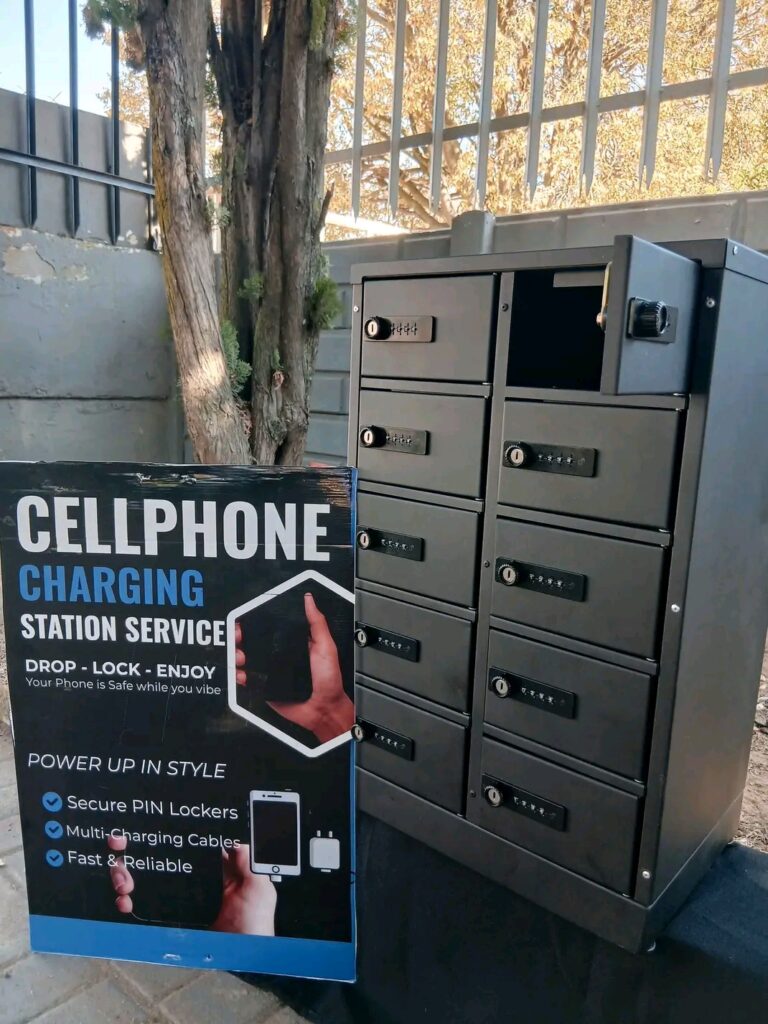
How to Earn Money at College With a Cell Phone Charging Station
A cellphone is the essential third hand in a student’s life. Students use their phones to connect with friends and family, learn through online courses, explore new opportunities, get updates and reminders, do research, and more.
However, there’s one issue that can throw a curveball to everything we’ve mentioned so far: a dead battery.
If you are an entrepreneurial student, maybe this small everyday problem can be turned into a business opportunity. A cellphone charging station on a college or university campus can be both a great student service and a money spinner.
The concept is not complicated: allowing students to bring their mobiles to charge at a safe, accessible location and paying a small fee for the opportunity.
That said, no business is without risk. Before you purchase equipment, check there’s demand for your service with students, if it will be approved by the college and if you’re clear on the be storedings involved to ensure safety and security.
Start by identifying the Need
Check to see if there is demand for cellphone charging before buying equipment.
Campus hotspots Take a walk around busy parts of the campus. Students are likely to spend hours in lecture halls, libraries, student centres, residences, coffee shops and other common areas. Find out if they have issues with their device running out of battery power and if they’d be willing to pay for an easier charge.
You might also do a very informal survey with questions like:
Does your cellphone battery die when you’re on campus?
Would you pay to get your cellphone charged in an emergency?
What price would you consider reasonable?
Based on our charging setup, how long do you think a charging session would last?
Want to stay close to your phone while it’s charging?
Would you employ a protected locker in which your cell phone could cost?
They can also let you see if there really is a business opportunity before you have to put your hard earned cash.
Get Permission From the Campus
This is the most important step.
Charging Tables Placed inside College Buildings and Facilities – Never put a charging table inside a college building, residence or other facility on campus without obtaining permission. Colleges and other educational facilities often have policies regarding student businesses, security, the use of facilities and the use of electricity.
Go to the relevant department, such as student affairs, the campus entrepreneurship centre, residence management or the facilities department.
Explain your proposal clearly. Include information about:
Where you want to operate.
What equipment you intend to use.
How customers will pay.
How phones will be protected.
How electrical safety will be managed.
What hours you intend to operate.
How the service will benefit students.
Written permission is better because it leaves a paper trail that the school has consented to the activity.
Choose the Right Location
Geography may have an enormous impact on demand.
Where would be a good place for the charging station? It should be somewhere students already go to. Consider the following:
Student centres.
Residence common areas.
Libraries.
Cafeterias.
Study areas.
Campus entertainment areas.
Other approved high-traffic locations.
Adequate electricity and supervision.
Security is especially important because customers can trust you with expensive devices.
A visible location in a public area can make students more comfortable using the service.
Start With Basic Equipment
You don’t have to buy the top-of-the-line gear to get started.
A basic charging station could include:
A sturdy charging table, cabinet or kiosk.
Reliable charging cables.
Multiple charging ports.
Suitable power distribution equipment.
Cable-management equipment.
Lockers or secured charging stations if phones will need to be stored away.
Clear pricing and operating information.
EQUIPMENT – Items used are suitable for the electrical environment and meet the relevant safety standards.
Do not use any damaged cables, excessive extension leads or inferior quality electrical goods.
If electrical work is needed such as the installation of new or modification of existing electrical circuits, then a suitably qualified person will need to be engaged and the requirements of the institution adhered to.
Decide How Customers Will Pay
There are several ways to charge customers.
This can be by the amount of time the user is charged for the charge session. So, for example, R5 will be charged for a period of time.
The tuition should be low enough that students can afford it, yet it should cover your operating costs.
For example:
40 sessions worth R5 = R200 daily turnover.
If the service is provided for 22 days in an academic year:
R200 × 22 = R4,400 in monthly revenue.
Remember that this is revenue, not profit.
You will still have to deduct any expenses such as equipment, maintenance, replacement cables, electricity where applicable, transaction fees, transportation costs and any campus-related expenses.
Actual results will, of course, be dependent upon customer demand, prices and operating costs.
Consider a Subscription Model
Another idea is the introduction of a charging station as a membership or prepayment service for regular customers.
As an example, some students could pay a flat rate for a predetermined number of charging sessions a month.
This might also attract one-off customers and simplify revenue estimation.
But, watch out for some unlimited charging packages. A few customers who use the service a lot could make an unlimited plan unworkable as a profit-making proposition.
A stipulated amount of charging sessions or usage per day may be simpler to control.
Protect Students’ Phones
This kind of business is greatly affected by security issues.
Some learners might be hesitant to give their costly device to a stranger.
Another way to do this is to allow customers to stay near their phone while they are charging.
Another alternative is to have charging lockers that could be locked individually.
If you are storing phones, create a clearly defined system for logging clients and their phones. For instance, you could give each transaction a number which matches a numbered locker.
Next, know what your legal requirements are and what campus policies there are regarding customer property.
Never claim that a phone is insured from theft or damage when it isn’t.
Keep Different Charging Cables Available
Students use different devices, so compatibility matters.
USB-C is common, but some other devices use a different cable. Offering some options for extra cables may allow your service to help more students.
Don’t forget, all cables may also get damaged or go missing, so include the cost of a replacement in your budget.
After your business has been set up you might also be able to sell charging cables, adapters and any other approved accessories as a source of supplemental income.
Add More Services
After the charging station builds demand, think about what other related products or services students might require.
Depending on campus rules, these could include:
Charging cables.
Phone adapters.
Screen-cleaning products.
Earphones.
Stationery.
Power banks.
Printing services.
Document-related services.
Other small technology accessories.
The theory ought to be simple: include goods that students actually need, instead of including excess stock.
The charging station might even turn into the launch point for a small campus convenience store.
Use Technology to Manage the Business
Technology can help simplify the business.
A spreadsheet can be used to record:
Daily customers.
Revenue.
Expenses.
Equipment purchases.
Repairs.
Repeat customers.
Charging-session numbers.
If lockers are secure, a numbering or booking system can be used to manage customer devices.
However, digital payment methods could also make transactions easier and decrease the need to carry around cash.
Approved student communication channels and social media can be used to communicate operating hours, pricing and new services.
Build Trust With Customers
The customer is paying for a service, and they may also be placing their valuable property in your care.
Professionalism is therefore extremely important.
Keep the charging station tidy. List prices visibly and issue receipts of the transaction as needed.
Treat customers respectfully and maintain accurate records.
Address the problem. If an issue with equipment or with the customer’s machine arises, take care of it in an open and expedient way.
A good reputation allows your small business to pull in regular customers without the need for a large advertising budget.
Create a Student-Friendly Brand
A simple brand can help to make the service more memorable.
Choose a short, catchy name with consistent signage and colours.
The business purpose should be clear.
For instance, you might include a message along the lines of:
“Low Battery? Stay Connected.”
Simple messaging can be very effective as it gets the message across straight away.
Offer Emergency Charging
Students may be willing to pay for a charge when they need an emergency charge.
A student may just suddenly turn around and find their battery is running low when they are about to attend an important lecture, presentation or interview, etc., for a face-to-face or online class.
You may advertise the station as being a great pick for students who want to charge their phones.
…But do not set out to improve a specific percentage of your battery within a given timeframe. The speed at which your device charges is determined by many technical considerations that include your device, your charger, the cable you use. Whether or not the battery has any issues.
Or, At least, sell its ease of getting charged.
Consider Power-Bank Rental
Renting or selling power banks could also be a potential business model.
It allows more flexibility because the customer does not have to stay at the charging station.
But renting comes with extra risks. Power banks can go missing, get broken or be stolen.
Hence you would need to establish a clear system for deposits, identification, collection and returns which meets the rules of the campus and existing legal requirements.
A stationary charging station might be easier to operate for a novice entrepreneur.
Understand the Costs
Determine the investments you expect to make and the expenses you anticipate before the business is up and running.
Initial costs could include:
Charging equipment.
Cables.
Power equipment.
Lockers.
Signage.
Payment equipment.
Furniture or the charging cabinet.
Ongoing costs could include:
Electricity, where applicable.
Replacement cables.
Repairs.
Transport.
Marketing.
Payment-processing fees.
Campus-related fees.
Know your break-even point. You must determine your balance point before you begin — calculate your initial investment and when you will break even.
Let’s say you put in R5 000 and end up earning a net profit of R1 000 every month, you could pay back your investment within five months.
This is just an example. Your real break-even period will vary depending on your level of investment, customer base, prices and costs.
Keep Safety at the Centre
You can’t risk the safety of your employees and your business when you need to save money.
Electrical outlets should not be overloaded. Do not use damaged chargers or cables. Liquids should not be brought near electrical equipment and the electrical needs of the institution should be adhered to.
Otherwise, you should rely on a suitably qualified person.
Never allow an enterprise intended for small comfort to become a real safety risk.
Turn the Idea Into a Learning Experience
A campus charging station can give more than potential income.
It may also be able to offer students some of the business skills such as:
Identifying customer problems.
Developing a business model.
Calculating revenue and expenses.
Marketing a service.
Managing customers.
Keeping financial records.
Maintaining equipment.
Solving operational problems.
Building a brand.
Negotiating with institutions.
These abilities may continue to be valuable after graduation, whether the student moves into formal employment or embarks on another business venture.
Measure Your Results
Assume that the business is thriving when money is received.
Track your results.
Useful measurements include:
Number of customers per day.
Average daily revenue.
Operating expenses.
Equipment failures.
Replacement costs.
Repeat customers.
Busiest times of day.
Busiest periods of the academic year.
You might find that demand is higher during examinations or at certain times of the day.
It can enable you to determine the right timing for opening and how many further charging points are appropriate.
Expand Carefully
If there is guaranteed demand at the initial charging station, you may want to look at increasing to an additional approved campus location.
One day you could own a number of charging points or collaborate with other students who run stations within a business that you have set up.
But any expansion should follow once you have shown that the parent business is practical and profitable.
Going too fast can cost you dearly as it can lead to inefficiencies and increase expenses.
Advantages and Disadvantages of a Campus Cellphone Charging Station
A cellphone charging station may be a good student business idea as it solves a common problem.
Students use their phone for communication, education, online services, banking and obtaining information. A charging service of this nature can therefore be quite handy as well as a potential money-earner.
But the venture also has downsides, mentioned below, that you should weigh before investing.
Benefits
1. It Solves a Real Student Problem
On campus, some students could be away from a power outlet for several hours.
A charging station might be a good idea for a mobile phone.
2. It Can Generate Revenue
You can even make a little money from charging, provided your students are willing to pay for the service.
For instance, if 50 customers each buy a R5 top up, that is a total of R250 worth of sales for that day.
Actual profit is revenue minus operating expenses.
3. It Can Start Small
Starting small is fine.
Test the waters with a couple of charging ports before sinking more cash into it.
4. It Can Create Additional Revenue Opportunities
As soon as customers are using the station, related products like cables, adapters or power banks might be offered. (Depends on campus requirements.)
5. It Builds Entrepreneurial Skills
Business running gives you hands-on experience in marketing, business planning, equipment servicing, finance and customer service.
6. It Can Offer Convenient Payment Options
Payments by electronic means can help customers make payments more easily and can assist with their bookkeeping.
7. It Can Expand
Additional approved charging stations might be approved for other locations across campus if there is evidence of need.
Challenges
1. Institutional Permission
Operating a commercial service on any part of campus may not be approved.
Equipment should be purchased or equipment operations started only after institutional approval has been obtained.
2. Phone Security
Clients might be unwilling to leave costly mobiles lying around.
This problem can be mitigated by providing secure lockers or a design that keeps the customer in close proximity to their phone.
3. Damage or Loss
The leads and equipment can get damaged or misplaced. Customers could also complain about their device being damaged while charging.
These risks can be controlled with clear procedures, appropriate equipment and suitable terms.
4. Electrical Safety
Unsafe chargers, frayed wires and power strips put safety at risk.
Equipment and installation should meet the relevant safety standards.
5. Initial Investment
Even a small charging station requires an initial investment.
Calculate the number of charging sessions required to recoup the initial expenditure.
6. Free Alternatives
There could also be free electrical outlets or charging stations on some campuses.
Hence, a paid service must have a well-explained convenience or service for the customer.
7. Uneven Demand
Demand may vary throughout the academic year.
It might tend to go up during the exams or busy times and down during the holidays and campus breaks.
8. Equipment Maintenance
Old cables, ports and other gear need replacing.
Include the costs of service and replacement.
9. Limited Capacity
A limited number of charging points are available at a small station during busy times.
It can be solved by adding capacity but this can also be expensive.
10. Customer Expectations
Different devices charge at different speeds.
The company must state that charge time differs depending on the device, cable, charger and other technical factors.
Start with research rather than equipment.
Decide on a venue and secure institutional approval. Then test with a small survey if students are willing to pay for the service.
Start with a few charging points and observe how they are used in reality.
Maintain good records of all your financial transactions and check the numbers often.
Keep in mind that if students leave their phones at the station, security should be a concern.
Safety issues: make sure you always use safe and reputable equipment. The cost of using cheap electrical equipment can be far more than the saving you make.
Conclusion
A cellphone charging station is, therefore, a relatively straightforward student business idea. Why? Because it solves a prevalent problem: students need their phones all day long, but their batteries don’t necessarily always get them that far.
The business opportunity that exists is to access charging for ease, on a device, without going to a physical location at a secure rate.
The basic process is to get clearance, find a place, provide the right tools, protect customers’ devices, set honest pricing and maintain the books accurately.
Begin with a few charging points and learn from real customer behaviour before you scale up.
If there is demand, other features such as portable lockers, charging cables, power banks or other campus approved products could be added.
The monetary value of the thought extends far further than the potential revenue.
Getting to Know the Customer: a student operating a charging station can learn how to recognize a customer problem, develop a business model, manage cash flow, communicate with customers, market a service and troubleshoot issues.
Nothing in business says you must have a sizable building, costly equipment or a big work force.
A business can sometimes start by focusing on a little problem and coming up with a straightforward approach to fix it.
This story is part of a series exploring how college students make money.
A dead cellphone battery might not be such a big deal on a campus filled with students.
But for the college entrepreneur, it could be an opportunity to offer a needed service, acquire business skills and make some money.
The mantra is to launch responsibly, trade professionally, be aware of the risk, and only grow if there is a real demand for the additional services.
